

Corperate Ego and the Death of Story
Part 2: What WWE Understands That Disney Doesn't

Last week, we looked at what happened when the largest creative company on Earth decided that recognition was the same thing as being emotionally invested in a story. We watched Disney walk into WrestleMania, the Oscars, and American Idol, carrying only a puppet. And we asked a simple question: what is this movie actually about?
We still don’t have the answer.
This week, we’re going to trace that pattern. We’re going to look at what separates a story from “a brand experience” and why WWE, of all companies, understands something that Disney has completely forgotten.
BREAK BREAK: This piece is about recognizing a pattern in how stories are being made and sold to you. And it matters because the stories we consume shape how we think about ourselves. That’s exactly what we explore in Great Escape, our forthcoming book from Post Hill Press! Jump on the waiting list at greatescapebook.com for exclusive preorder bonuses and early-access features.
Here’s what studio executives do not understand, given the structural incentives of Hollywood.
The audience can tell.
The most famous filmmakers alive have been saying so out loud for years. Martin Scorsese, in 2019, on Marvel: “The closest I can think of them, as well made as they are, with actors doing the best they can under the circumstances, is theme parks. It’s not cinema, it’s something else.” Ridley Scott was more blunt: “Superhero movies are f*cking boring as sh*t... mostly saved by special effects, and that’s becoming boring for everyone who works with special effects.” Quentin Tarantino, framing the entire decade: there is a war for movies, and one side is original cinema and the other is commercial IP, and the commercial IP side is winning even as the audiences walk out feeling nothing.
Riley’s Moment of Reckoning
I want to tell you about the moment I understood what the audience actually means.
Last year, I was deployed to Al Dafra Airbase. Between the shipping-container style dorms, someone had rigged up an old TV with the American Forces Network on one of the patios — a few plastic chairs, the kind of improvised setup that happens when people are far from home and looking for somewhere to chill at the end of a day. As the desert cooled after sunset, the guys would drift out there with cigars.

That’s where I saw the replay of Elimination Chamber on the TV. I hadn’t followed WWE growing up. Pro wrestling was frowned on in my house. I knew the names in the way you absorb them through the background of American pop culture — Stone Cold, the Rock, Cena, Hogan. Etc. But that night, everyone around me was locked in on the screen.
John Cena was about to turn heel.
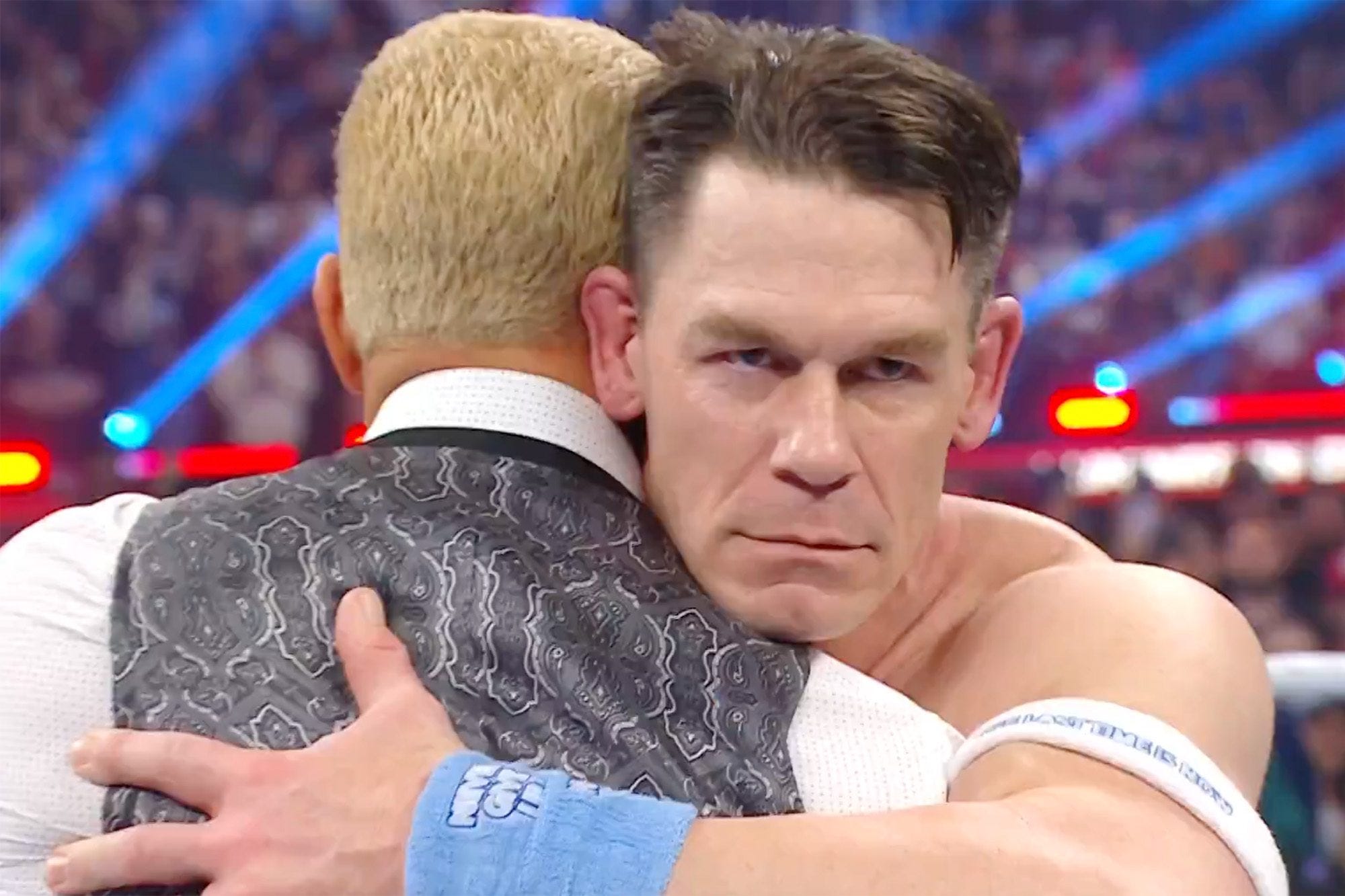
Even without the full context, I knew the weight of it. I had seen the clips all over Instagram Reels and X. I remembered what Cena had represented to kids my age — Hustle, Loyalty, Respect. The Make-A-Wish guy. The dependable. And in that moment, halfway around the world, watching a borrowed TV with a handful of deployed buddies, something clicked. It wasn’t the spectacle that held the patio’s attention. It was the sense that a figure we’d all known growing up was about to become something else. As cheesy as it may sound, Cena carried with him a shared cultural meaning — the unwavering hero to a generation of nine-year-olds — and we were about to watch that contract get torn up in real time.
That is what a great story does. It earns the moment. And the people watching feel the weight of the story. The men on that patio were not huge wrestling fans. But all of us, in that moment, we were the audience sucked into a compelling story.
That patio in the desert is what I think about when Disney rolls into WrestleMania carrying the Grogu puppet.
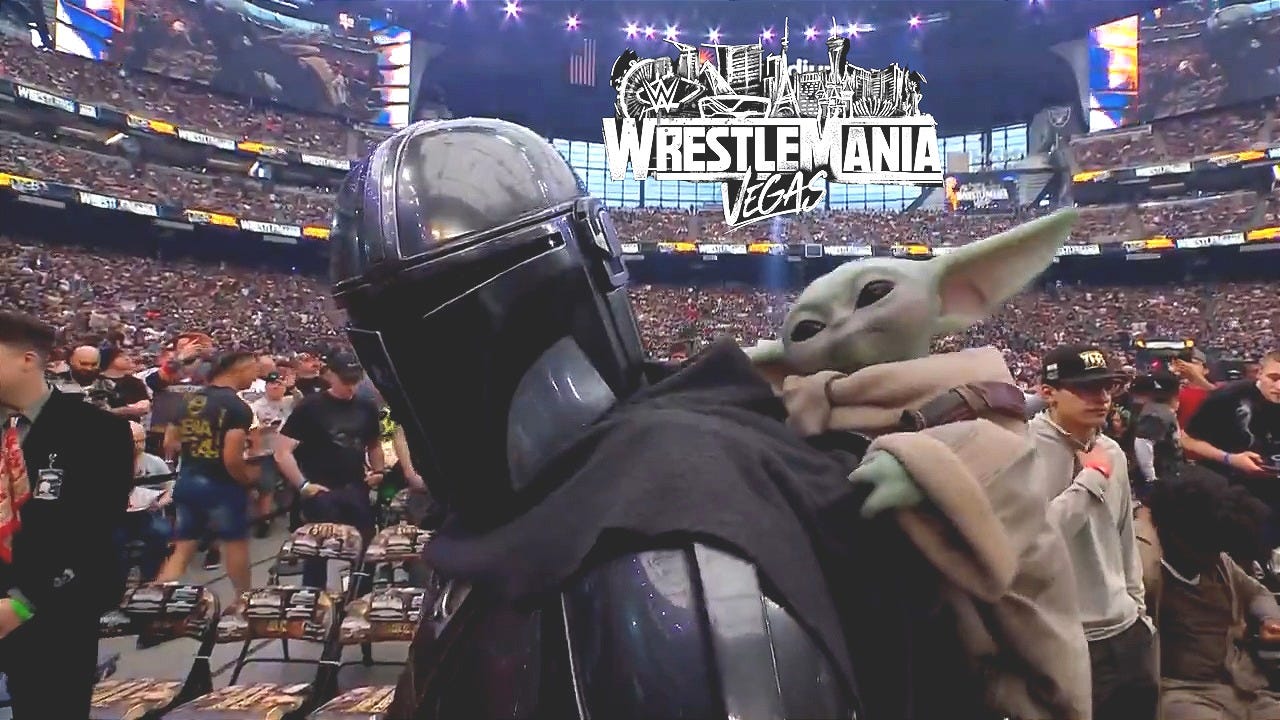
WWE is a storytelling company. It builds character arcs over years. It pays off heel turns after decades of setup. When Cody Rhodes finished the story at WrestleMania 40, the entire arena erupted, because two decades of narrative groundwork landed in a single moment. And Disney, walking into that crowd, brought a cute little puppet.
And by the way, the same studio that walked into WrestleMania has treated wrestling performers as largely disposable. Becky Lynch’s role in Eternals: cut. Seth Rollins’ scenes in Captain America: Brave New World: cut. Dave Bautista, in 2018, called Disney’s handling of the James Gunn firing “pretty nauseating.”
Also, the Gina Carano fiasco...
There is nothing inherently wrong with a studio appearing at a major entertainment event to promote a film. WrestleMania draws tens of thousands in-arena and millions on broadcast. But all they brought was Baby Yoda. A marketing pitch that has not changed since 2019. A pitch designed for an audience that the studio doesn’t respect: here’s the thing you already like, please buy it again.
What Star Wars is giving us is a cameo.
Ego
I keep coming back to a line from Ryan Holiday’s Ego Is the Enemy:
“Ego is the enemy of what you want and of what you have: of mastering a craft. Of real creative insight. Of working well with others. Of building loyalty and support. Of longevity.”
Disney has, over the past decade, lived largely off the creative vision of two men — George Lucas and Stan Lee. It has spent the last ten years extending their work without doing the underlying work, building much of anything new. I think Andor was the exception that proves the rule.
The former CEO of the company said this on the record. Bob Iger, in July of 2023:
“In our zeal to basically grow our content significantly and serve our streaming offerings, we ended up taxing our people, in terms of their time and their focus, way beyond where they had been... Frankly, it diluted focus and attention.”
Iger admitted, almost three years ago, that the company had lost focus. Had stopped being able to give creative work the attention it needed. Had spread itself across three Disney+ Star Wars shows a year, a four-hundred-million-dollar immersive hotel, and a Marvel slate so saturated that audiences gave up halfway through Phase Five.
A story is a farmboy facing the monster his father has become. It is a Hobbit carrying a Ring he never asked for towards the fires of Mount Doom. It is an archaeologist letting go, letting the Holy Grail fall.
That is why these stories have endured. That is the gift Lucas and Spielberg gave us. That is the gift Tolkien gave us. And it is the only reason any of us still care about Star Wars in 2026 — because somewhere before the cookie shake and the WrestleMania cameo, we remember what these films meant to us.
I haven’t seen The Mandalorian and Grogu. No one has. The ad campaign hasn’t really told us what kind of story it is. But on May 22, the film gets to speak for itself. And I hope, really hope, that it has something to say.
This essay is part of a larger conversation we’re having in Great Escape, our forthcoming book from Post Hill Press.
We argue something that might sound strange: the stories you loved as a kid — Star Wars, Lord of the Rings, Narnia, Harry Potter — contain more wisdom about than anything in the self-help aisle.
Jump on the waiting list at greatescapebook.com for exclusive early-access and preorder bonuses.
-Riley
I truly enjoyed the article and, while you're right on about Disney, even a Disney hater like me has to give some love to Andor and the Greatness of Tony Gilroy.
A few thoughts, and I apologize for nit picking (I just so happen to be into both comic books and professional wrestling).
"WWE is a storytelling company. It builds character arcs over years. It pays off heel turns after decades of setup."
This rarely happens and when it does it is often not done well. The John Cena heel turn was fantastic but the follow up was horrendous, precisely because they did not have anything planned out. The same can be said for The New Day heel turn (and now they are no longer with the company). Cody's story played out well at WM40 but half of his story took place outside of WWE. Was that great storytelling on their part or luck? Probably the greatest story that they have told this century was with Daniel Bryan and the YES! movement. The problem is, that story was never supposed to happen. Had CM Punk not walked out of the company causing that year's WM plans to be completely rewritten, Bryan would have been in a meaningless match against Sheamus instead of winning the WWE World Heavyweight Championship in the main event. That was a great story despite what WWE had planned. Thankfully they listened to their audience. That said...
"A pitch designed for an audience that the studio doesn’t respect"
While I completely agree with you that Disney does not respect their audience, neither does WWE. In fact, I think a good argument can be made that WWE hates their customers but loves their money. The fact of the matter is WWE is a horrible company, especially now as part of TKO, and story is not their top priority. Just look at what happened with Cody Rhodes at this year's WM. Yes there are sometimes good, even great stories, but often it is despite WWE's best efforts.
"Disney has, over the past decade, lived largely off the creative vision of two men — George Lucas and Stan Lee."
While the MCU was built on characters that Stan Lee helped to create and a comics universe that he helped to build, it's not fair or accurate to compare his level of vision with that of George Lucas. Marvel Comics has always been more than Stan Lee. There would be no Spider-Man without Steve Ditko and don't even get me started on the contributions of Jack Kirby (we'd be here all day). The first Avengers film yes pulled from the original Avengers comics by Lee and Kirby but also pulled from The Ultimates, a series that ran from 2002-2004, written by Mark Millar with art by Bryan Hitch. A lot of what we've seen in the MCU was inspired by stories and characters that came well after Stan Lee stopped writing.