

Is Empathy A Superpower?
Maybe—but superpowers aren't good by default

You’ll find no shortage of discourse about empathy these days. It’s become a modern moral absolute, the thing everyone must cultivate, the thing that will solve injustice and measure a person's goodness. A few months ago, I dug into the debate over what some call “toxic empathy” and made the case that yes, empathy can be weaponized. That seems rather obvious, but people still object.
Heroes, people who want to do good in the world, are highly prone to being deceived by weaker bad guys who intend to do harm and know exactly how to manipulate the strong into standing aside. Think Scar, Hook, Palpatine, Green Goblin…..
I still believe that’s true. But the problem runs deeper than most people realize. So I made a video about it….if you’re not in a reading mood, here it is.
The Special Human Gift
Let me start with what’s undeniable: human beings have a unique ability, more so than even the most sophisticated animals, to feel and act with empathy for the good of our fellow humans, for non-human life, for inanimate objects. We humanize, we personify, we can see the world through the eyes of a tree. We do this all the time through art, and artwork really is the mark of what we are.
Consider the monkey “Punch,” who went viral for loving on a stuffed animal after being abandoned by his mother. Punch connected with an inanimate object, projected shared qualities onto it, and found comfort in it. Other animals can do this, too—dogs can befriend lions. But you’d be hard-pressed to find anything other than a human being that feels the pain of another person, feels threatened by them, is afraid of them, and yet still acts charitably and in good faith. The lion and the dog will not share space in discomfort.
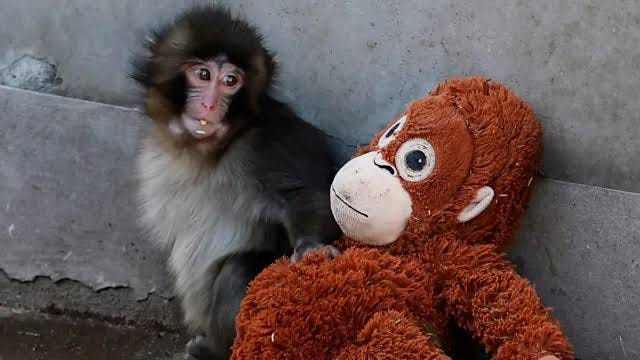
You and I can. We understand a shared nature and recognize failure, sin, and evil-doing as something we too could fall into. That’s not weakness. Genuine empathy…the ability to see through another’s eyes, to identify with their experience or pain, to walk in their shoes…is a superpower we possess.
I did a whole chapter on this in my first book, and I still mean it: you can’t have a thriving democratic society without some mediating layer of the human spirit that recognizes shared humanity and makes allowances for difference. Sometimes you have to ask yourself to understand an issue through another's eyes. That’s what empathy is.
But here’s what almost no one wants to say: empathy is not the same thing as wisdom. And unregulated empathy, deployed in the world of public policy and politics, inevitably leads to choosing one group over another in how empathy is distributed.
We’re diving deeper into empathy, virtue, duty, and the limits of the heart in our upcoming book, The Great Escape: 30 Reflections on Stoicism, Faith and the Wisdom of Great Stories. Join the waiting list at GREATESCAPEBOOK.COM — pre-orders launch next month.
The Problem of Infinite Empathy
You can see the world through the eyes of a pregnant 14-year-old girl. You can see the world through the eyes of the young father whose life is about to get very complicated. But you can’t really see the world through the eyes of the unborn child. That’s actually beyond what empathy can do, and it requires something else entirely — reason and moral foundations. It’s a different part of the mind.
In the anime Frieren, we’ve discussed on this channel a demon who ate a human child. The hero, Himmel, chooses to spare the demon in hopes it can be rehabilitated. What we didn’t mention is what happens next: a man steps forward to adopt the demon and comfort the creature who killed a young child — and he does so while walking right past the parents of the victim, without saying a word to them. He prioritized the killer over the victims of a murder.
And this is what often happens in the real world, because human beings are not perfect and are not capable of unlimited empathy and focus. We may aspire to transcending our circles of concern — family, community, country — and try to care for all of mankind. But it always happens that someone will be neglected, overlooked, or harmed. The emotional and moral resources are finite. It’s okay to admit it.
A Power Without Ethics Is Just Force
Here’s what people often miss: A power isn’t good or evil. A power is only as good as what you do with it. This is Superhero Movie 101 — great power, great responsibility. The choice to use your ability for others or to use it for yourself. That’s Spider-Man versus the Green Goblin.
Empathy is the same. It’s a strength in certain contexts and an Achilles’ heel in others. To recognize that is not to reject empathy; it’s to grow up about it.
Why We Obey Traffic Lights
I see people (John C Reilly included) trying to argue that you stop at red lights because of empathy — that you’ve internalized empathy for other drivers and pedestrians, and that’s why you obey traffic laws.
No. That is not why you stop at traffic lights.
You stop because rational prudence tells you that if you don’t, you’ll die, get sued, or end up in court. You develop lawful behavior as a habit, sure, but there’s also a structural incentive — if you act poorly, you lose your privilege of driving legally. You’ve internalized the rule, and there’s a penalty if you don’t obey it.
There’s a sense of social responsibility involved, absolutely. But there’s another word for that responsibility — duty. A sense that you owe it to others to honor an agreement we’ve all made at the DMV to operate vehicles safely. That’s not empathy. That’s honor.
It’s a real problem how much empathy is being used to describe all other virtues and moral frameworks. We’re collapsing distinct things — duty, prudence, honor, compassion — into one word and then wondering why the conversation never gets clearer.
The Golden Rule Isn’t About Feeling
The Golden Rule — “do to others as you would have them do to you” — appears in Christian teaching (Luke 6:31), in Jewish thought (the Talmud’s inverse: “do not do what is hateful”), and in Confucian, Buddhist, Stoic, and Islamic texts, with only minor variation. It’s universalist.
When we find a principle expressed across cultures that formed independently, that had no contact with each other, we should ask: where did this come from? Why?
C.S. Lewis tackled this in both Mere Christianity and The Abolition of Man. Some will say that the Golden Rule, like morality itself, is an evolutionary byproduct — something we learned as a means of survival. But if you follow that logic to its endpoint, the concept of morality collapses.
If a scientist explains to you that pain is simply C-fiber stimulation triggering a neural response, that explains the pain. But it doesn’t tell you why you should listen to it. You don’t have to. Morality is the same. You don’t have to obey it. And anyone who tries to claim objective morality while simultaneously condemning injustice and human rights violations is stuck in a contradiction. They’re reaching for the Tao, for natural law, for something transcendent — while denying its existence.
We keep evolving, we keep progressing, in their eyes. And we just get more and more immoral. That’s because progress and morality aren’t connected to each other unless morality is real.
Evil Doesn’t Submit to Empathy
The real question John C. Reilly and everyone in this conversation needs to answer is simple: does evil exist? Does it move through people? Does it dwell in certain ideas?
If it does, and I believe it does, then empathy may help you understand why someone became evil. Consider the villain’s origin story, the “woe is me” justification, and the suffering that twisted them.
Empathy can be useful for understanding causation.
But empathy alone will not stop evil. You need more than sensibility to confront it. You need to say: sorry for what happened to you, truly, but no — you can’t just go around killing people because of your awful childhood. Your pain doesn’t grant you permission.
In The Lord of the Rings, Gandalf teaches Frodo about the virtue of pity and compassion for Gollum. Frodo learns it, feels it, and extends it toward the creature. But the answer is not to give Gollum what he wants — to give him the Ring because being without it causes him suffering. That would be empathy without reason.
Frodo has to order his sympathy by duty. Duty to the Shire, to the whole of Middle-earth, to the future of Free Peoples. To prioritize Gollum’s suffering over all of that is to give up the world. The compassion remains real. The recognition of shared nature remains real. But it’s subordinated to something larger.
That’s the move we’re told is so bad to make. Elon Musk has specifically said that Empathy is good…but with boundaries.
Superpowers and Limits
In summary: Empathy is a superpower. Sure! That part isn’t wrong. But superpowers have limits, and wisdom is learning to recognize them.
The strength to feel another’s pain, to see through their eyes, to extend charity across difference, that’s genuinely valuable. It’s irreplaceable in personal relationships, in the cultivation of virtue, and in the formation of just communities.
But it cannot be the final word on anything that matters.
It cannot be the only tool in your moral toolkit.
Because when you try to distribute empathy equally across infinite claims, when you refuse to choose between competing goods or to set boundaries around your emotional resources, you end up paralyzing yourself—or worse, you end up serving evil because you lack the hardness to say no.
The solution isn’t to reject empathy.
It’s to grow up about it. Be mature.
To recognize it as one virtue among many.
To pair it with reason, with duty, with honor, with prudence. To understand that the best people in history — the ones who actually changed things for the better — weren’t the ones who felt the most. They were the ones who felt deeply, thought clearly, and acted with discipline.
That’s the conversation we need to have. And it’s a harder one than what we’re having now.
We’re diving deeper into empathy, virtue, duty, and the limits of the heart in our upcoming book, The Great Escape: 30 Reflections on Stoicism, Faith and the Wisdom of Great Stories. Join the waiting list at GREATESCAPEBOOK.COM — pre-orders launch next month.