

Grieving with Ser Duncan the Tall: Part 1
How do we know when we are "knights"?

“I don’t know the right words,” says Dunk, the towering squire of the now dead Ser Arlan of Pennytree. The first thing we see in HBO’s George R.R. Martin adaptation, A Knight of the Seven Kingdoms, is Dunk carrying Arlan’s body in the rain to lay his master to rest in a lush green field.
From the very beginning, Dunk feels he needs help. Eulogizing his master is something an expert needs to do, and something he has yet to learn. He wishes there were a maester (scholar) present. But there isn’t — only him.
“Many famous people have said they never really grew up until their father died….We don’t have to be famous to understand what they are saying.”
- Sandra L. Graves
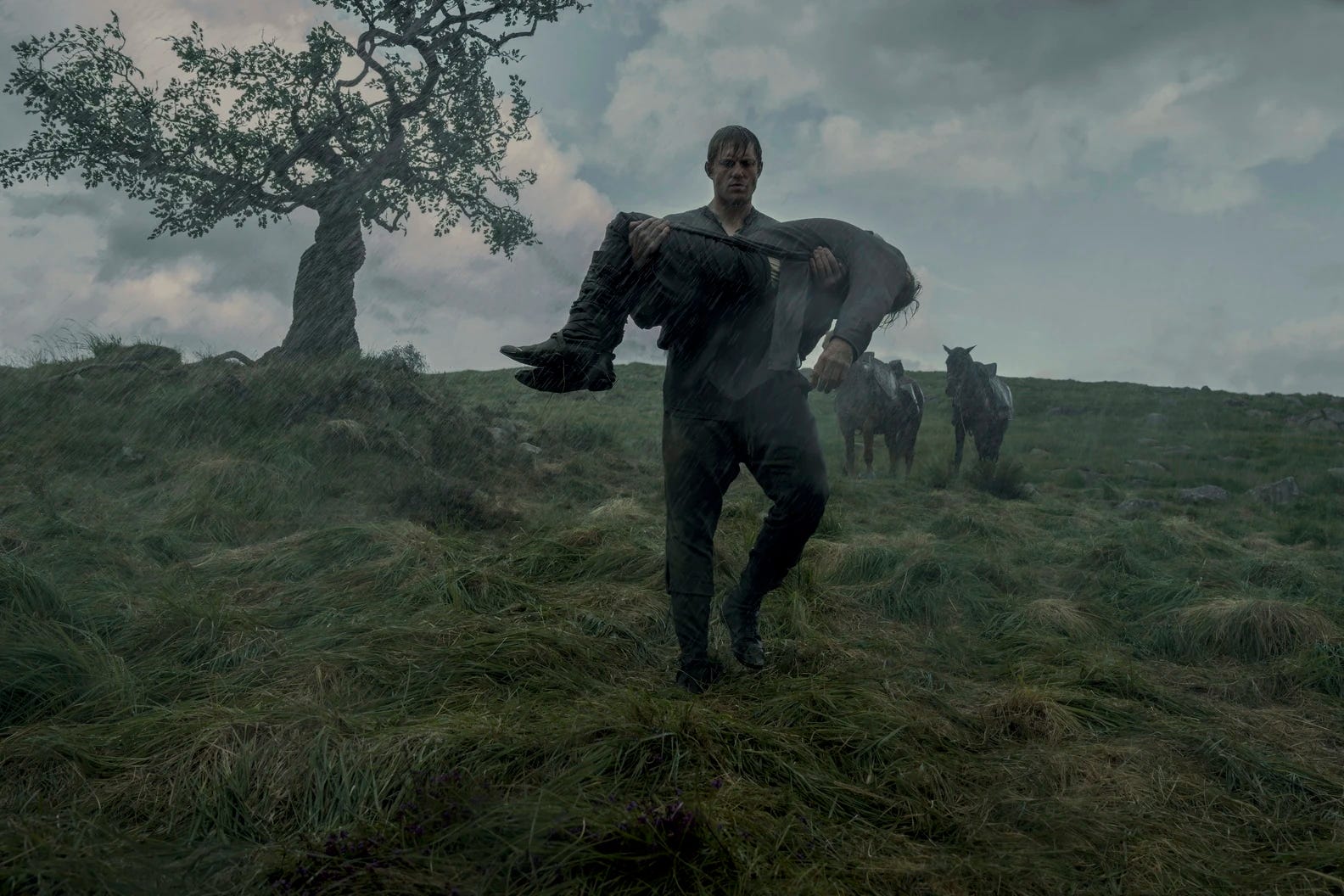
When I started A Knight of the Seven Kingdoms, I didn’t realize the feelings that would wash over me in its short six-episode run. This story feels like it was written for me in this moment, a low point in my grief over the untimely death of my father. Because I’ve never experienced a weighty loss, the phantoms of anger (rage), abandonment, anxiety, and confusion have seeped into my life without me knowing their source. I was reliably informed that grief wears many masks to disguise itself, but that tip hasn’t helped me to identify it whenever foreign emotions show up on the doorstep. I’ve been getting the shit kicked out of me.
This will be the first of several installments in a series on A Knight of the Seven Kingdoms. I want to take this on in small bites.
You Will Never Actually Be “Knighted”
The central question of A Knight of the Seven Kingdoms is whether or not Dunk was officially knighted by Ser Arlan before his death. Arlan was a drunk, a wildman, and unfocused. He took care of Dunk and brought him out of the life of an orphan and into the service of a hedge knight — quite the upgrade from living on the streets.
Part of being a squire is the hope to be knighted yourself one day, to move from apprentice to master, and then pay it forward to another young man.
If Duncan is asked, he was knighted. But much of the show suggests otherwise or leaves it as a mystery. Dunk has assumed the role of Ser Duncan the Tall, something he made up under pressure.
Dunk is a fully grown man, towering and strong, virtuous and capable, but he is missing something that matters deeply to men — hearing their mentor say the words: "You are ready."
When do we actually stop being students and become “masters”? We all know that when a child turns 18, they do not “become an adult.” The government calls them that, sure, but it’s not based on anything personal or true about the person. Your parent can call you an adult, but that doesn’t produce the feeling that you’ve got this under control and can handle life on your own.
My Dad did nothing but love on me. He was my “biggest fan” and encourager.
Since I was 20 and started a family, he helped me to feel that I could do it and thrive. But he still solved tons of my problems. Tax screw-ups. Car breakdowns. House downpayments. I got 15 extra years of crisis management and help before an infection took him away — this healthy, strong, and energetic man. I was not “knighted” or given an official notice that I was now to go it alone. It just happens. And I’m afraid, so afraid, because I don’t know when the next storm will come, and I don’t know what the hell I’m doing.
“No one ever told me that grief felt so like fear. I am not afraid, but the sensation is like being afraid.”
- C.S. Lewis
Imposter syndrome is a condition where you hold a position (supervisor, author, actor, teacher) and don’t really believe that you’re qualified to hold it. Everyone has felt it.
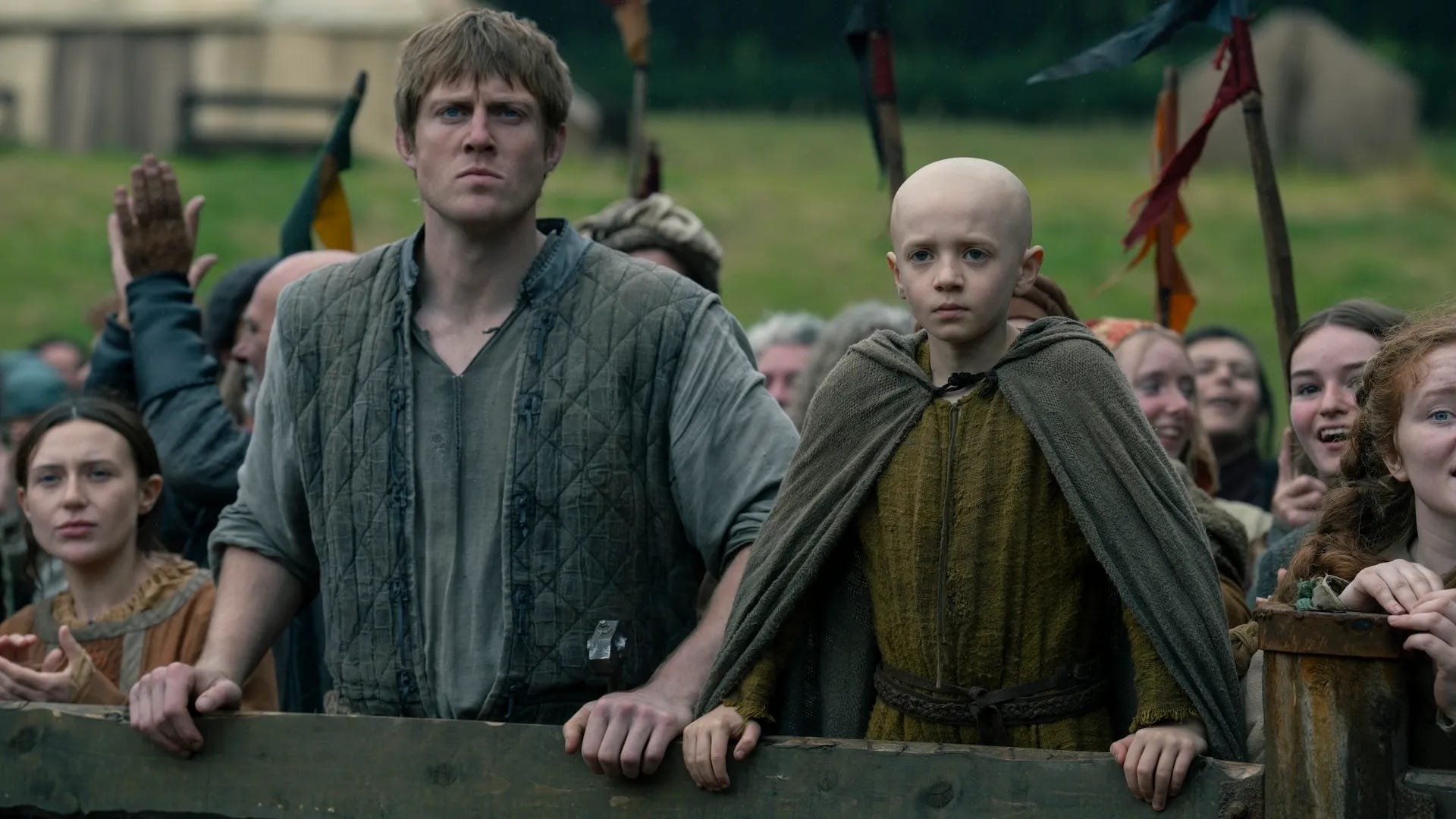
I don’t know what it’s like to be a woman, but I do know that being a man bears some relation to that mental hat trick. You find your strength in how other people see you. When a woman sees you as a strong, stable provider, you feel a bit more like those things. When you have a child, and they see you as authoritative and wise, you feel more of those things in you.
Dunk lived his life as a servant to Ser Arlan, and he carries himself as one (slouched and unsure) even in his absence. He does not see himself in the way his aspiring squire, Egg, sees him.
“You’re tall — so be tall.”
- Lyonel Baratheon
So what does Dunk do?
He lives according to Ser Arlan’s ideals. Not Arlan’s actions and bad habits, but what Arlan said a knight does. Arlan was not perfect. We learn in the first minute of the show that Ser Arlan would smack Dunk around a bit, drink a lot, and make a fool of himself out in the world — but always with one guiding principle as a guard rail — to protect the weak and the innocent. Nothing Ser Arlan did violated that guiding principle. Dunk is left to carry that one flame, and he does.
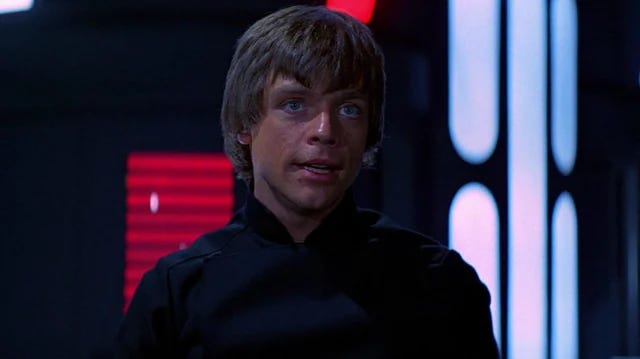
My favorite Star Wars movie, Return of the Jedi, speaks to this issue in its own way. Jedi Knights are inducted into an order by other Jedi. They used to endure trials and exit the Padawan process to become Masters — but the Jedi are gone, and Luke Skywalker is the last known student of this ancient order. He stands before Emperor Palpatine, having defeated Vader and spared his life, and Luke throws the lightsaber to the ground. He won’t execute his own father.
Luke says, “I am a Jedi, like my father before me.” He assumes the mantle. No one could knight him and give it to him. Luke Skywalker has to claim it for himself, knowing in his heart that it’s true. Doubts of the mind be damned.
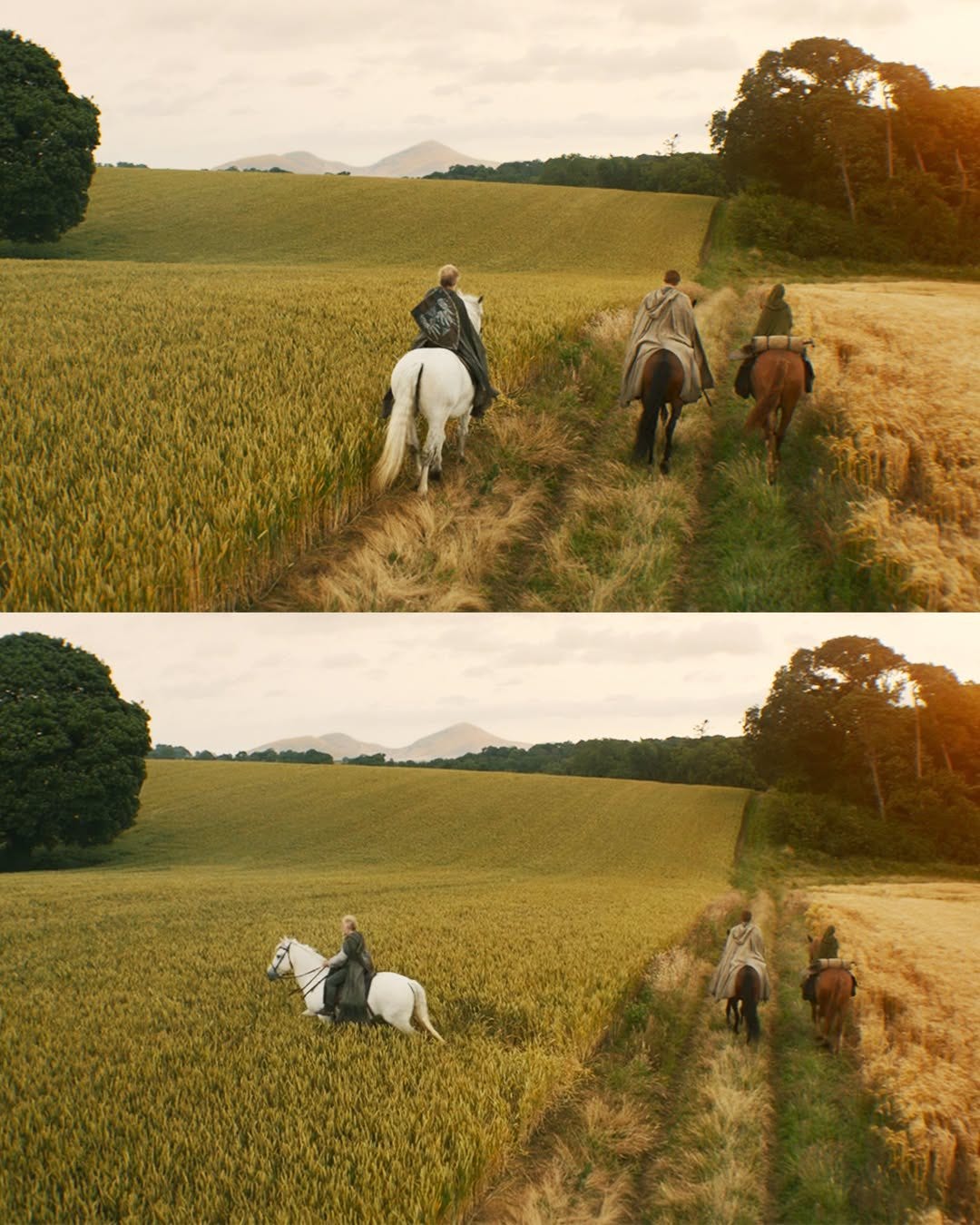
The final shot of the show’s first season is Dunk riding into the distance with his mentee, Egg. Arlan can be seen riding behind them, as a sort of ghost. He is indeed long dead. Dunk has resisted taking on Egg as a squire because he doesn’t yet believe he is Ser Duncan the Tall, but in saying Yes to Egg, it became a little more real.
Arlan turns and heads off into the field. Dunk must now do this on his own, and he is ready — as ready as anyone ever is to go it alone.
This is an emotional read. How wonderful that you found media that so reflected what you’re going through, further to your writings on looking to fiction and media for this.
What a beautiful, sad, true essay.